
Uncategorized

Turning Coconut Shell Waste Into A Valuable Product

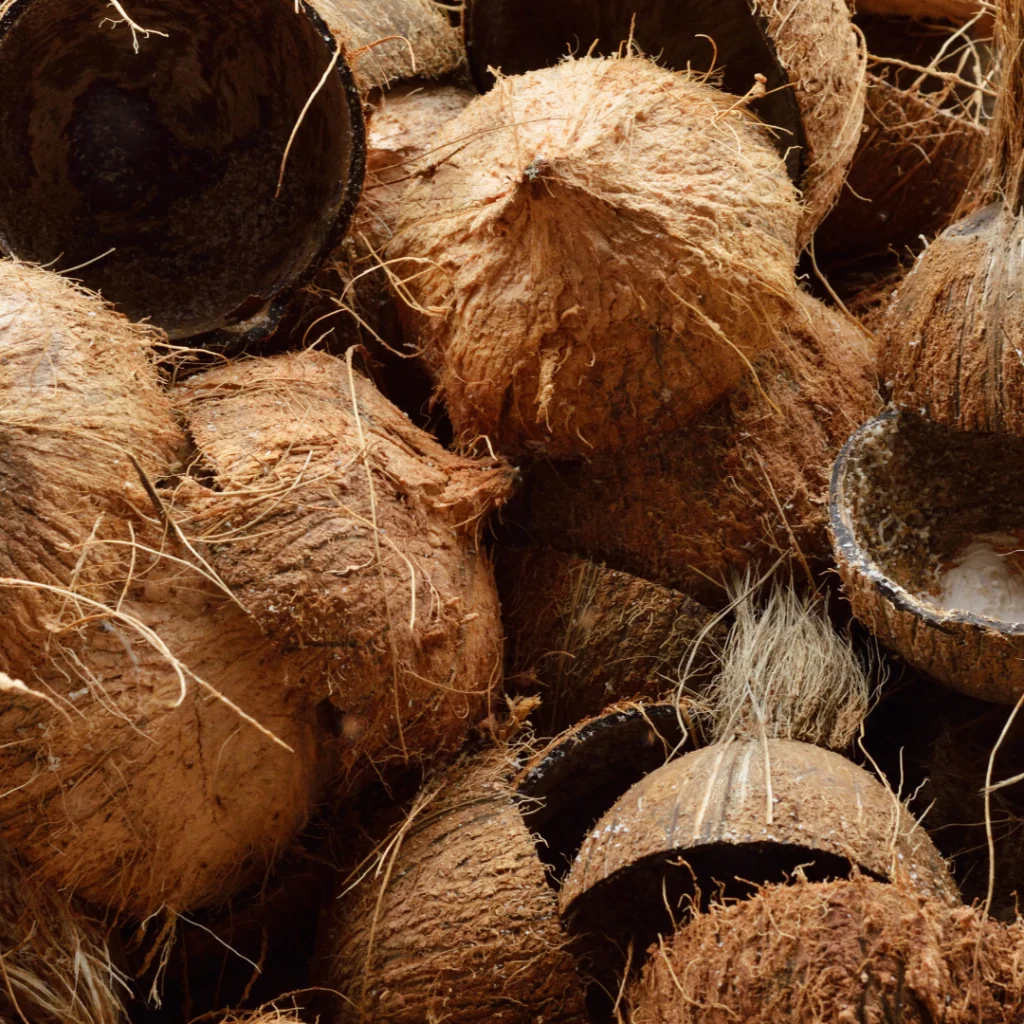
Coconut does have many uses and benefits, starting from its stems, leaves, to the fruit that can be used for various purposes. Even the coconut shell waste can be used to make handicrafts that have a fairly high selling value. However, lately the coconut shell waste has found its new purposes, and it can be used for something even better than a handicraft.   Coconut Shells: More Than Just a Handicraft Material   Most of the time, the coconut shell was only used in the creative industry to make handicrafts. Ranging from rice scoops to toys or key chains, bowls, cups, ashtrays, clothes buttons, table lamps, and so on, which are included in the form of souvenirs. There are also some who processed these coconut shell waste into coconut fiber which is the basic material for brooms, ropes and mats. Surprisingly, this coconut shell waste has another use aside from handicrafts. What’s amazing about coconut is that nearly every single part of it can be cultivated by humans and used to its maximum. Coconut shells can be used as raw materials to be processed into charcoal, which can still be processed into innovative products that can provide more value.   Charcoal Made From Coconut Shells   These coconut shell charcoal briquettes are an alternative fuel that is often used for cooking, especially in Europe it is often used for grilling food. In Middle Eastern countries, this type of charcoal is used for shisha or hookah pipe smoking purposes, meanwhile in Asian countries such as South Korea and Japan, coconut shell briquettes are being used for cooking purposes. The coconut charcoal is produced by burning coconut shells with a limited air supply in order to obtain carbonizations. The coconut shell will be losing 70% of its weight once it is heated. There are two ways of making this type of charcoal, there is the drum method and there is a pit method. The coconut shells that can be used for making this type of charcoal are the ones that are fully dried and mature. In order to get a high-quality activated carbon, then the raw material source should come from an excellent coconut shell. These coconut briquettes are considered to be a better product than the usual charcoal made from mangrove plants and coal, as it is more stable and can generate more heat. It is able to produce a clean burn, and is environmentally friendly compared to other types of charcoal and coal. Many countries used it for grilling and barbecue because the smell of coconut shell charcoal is neutral and pleasant. That is why there are also products called coconut charcoal BBQ as it is being sold as a fuel for barbecues. There are several reasons why this type of charcoal is said to be environmentally friendly compared to other types of coals. Firstly, charcoal made of coconut shell waste can be processed continuously without having to fear exhaustion, which means it is a good renewable energy. Besides that, coconut shell briquettes are being produced naturally, as it is made from coconut shells and only added with tapioca flour. This way, manufacturing coconut shell charcoal will not harm the environment as it has no toxic substances involved in the making. On top of that, the smoke emitted from these coconut shell charcoal briquettes is far less than the typical ordinary charcoal. Some might say it is barely even smoky, which makes it even more environmentally friendly as that the burning process will not pollute the area. That, combined with the fact it burns longer for around 2 – 3 hours, making it furthermore a better option than any other ordinary charcoal.   How to Produce Coconut Shell Charcoal     As mentioned previously, there are two ways of making this type of charcoal, which are the drum method and the pit method. Both methods involve burning in their process as it is the way to create carbonization to the coconut shell. The first method might require a lot of space as the drum will take a lot of space, but this method can allow a large production of charcoal. Firstly, a pile of mature and dried coconut shells are put into a drum. Once there are enough coconut shells piled inside, the coconut shell is burned. As the coconut shells are burning inside the drum, the ones that have yet to be burned are added gradually into the drum. This is done continuously until the drum is filled with coconut shells. Once full, the drum is closed and all the coconut shells in the drum undergo the combustion process. Slowly, the coconut shell will turn into charcoal. After being burned, sealed tightly, and covered with sand, the fire on the coconut shell will extinguish itself. Once the burning fire subsides, the shell is then removed and then pounded until smooth. The pounded shells will be filtered, and the results of the filtration are mixed with a starch mixture. The mixture of pounded shells and starch will be molded into different sizes and left under the sun to dry. And that is how briquettes are being produced. The pit method is the oldest method of making coconut shell charcoal. This method is considered to be a simpler method than the drum version since it does not require a lot of space and a drum, however, the downside of this method is that it can only produce charcoal in small quantities. With this method, the shells are filled inside a hole before burning. In order to make the fire stronger, usually there will be a small dry fuel added into the hole. Once the shells are burned, a layer of leaves and soil will be placed about 8 inches over the materials. The burning process takes around 2 days maximal (for better results). The post-burning process is somewhat similar to the drum method, with the burned shells being crushed and added into starch mixture, before then molded and left under

Turning Coconut Shell Waste Into A Valuable Product Read More »

The Versatility of Coconut

Coconut (latin: Cocos nucifera) is the sole member of the Cocos genus of the Arecaceae family. The meaning of the word coconut can refer to the whole coconut tree, seeds, even its fruit, which are botanically fruitful trees. Almost all of its parts are used by humans so that it is considered a multipurpose plant, especially for coastal communities. Its name, coconut, most of the time is being used to refer to the fruit of the palm. The fruit is commonly used for its water, oil, meat, and milk. However aside from those, there are actually many more things people are using the coconut for. Products Made Out of Coconut   As now technology is more developed and advanced, there are various ways of cultivating coconut. Aside from culinary uses, coconut can also be used for multiple health benefits. What’s even more beneficial from coconut is the fact they are quite sustainable, and only impacting slightly on the environment.  Here are the various uses of coconut, both the coconut palm and fruit. Coconut Water   Definitely, coconut water is one of the most famous products from a coconut. Who wouldn’t enjoy a glass of fresh picked green coconut? The clear liquid of its fruit is usually found inside young coconuts. The water produced by young coconuts are considered to be tastier, rich in volume and easier to access. But aside from its “tasty” taste, coconut water also has several benefits for our health. It is able to treat dehydration, and also can prevent vomiting. Coconut water contains potassium, sodium, electrolytes, calcium, vitamin C and contains Lauric Acid similar to breast milk, which means it is highly beneficial during pregnancy too. The water is also considered to be antibacterial, so drinking it twice a day might help in treating infections in our body. Coconut water can also be beneficial for losing weight, as it contains pure minerals that can help in speeding up metabolism in the body and produce energy that can be used during exercise to burn calories. The electrolytes are also capable to moisten, cleanse, and soften the skin. Coconut Oil   Coconut oil is a highly saturated oil that is traditionally produced from the extraction of raw coconuts or dried coconut kernels (copra). This oil can be used for cooking and also processed as a beauty care ingredient such as moisturizer. It is also being used to promote oral health, by swishing oil in the mouth to remove bacteria. Coconut oil contains saturated fat, medium-chain triglyceride (MCT), and this type of saturated fat can increase the number of calories burned by the body. With the presence of MCTs, coconut oil has antimicrobial, antifungal, and antibacterial properties. This oil has an antimicrobial effect against a number of disease-causing microorganisms. Aside from those, coconut oil is also considered to be useful for moisturizing dry skin. With its antioxidant content, coconut oil can improve skin function and protect the skin from external factors, such as infections, chemicals, and allergy triggers. Coconut oil can also help protect the hair from damage. Using the oil on the scalp can help in creating more flexible hair strands and help enhance the strength of the hair, thereby reducing the risk of breakage. Coconut Shell   Surprisingly, a coconut shell also can be cultivated for use. Previously, the shell was often discarded as a waste, but now there are also people who turn these shells into bowls. What’s interesting, bowl isn’t the only product that comes from a coconut shell. Now, there is charcoal made from coconut shells. This coconut charcoal is made with coconut shells as its main material. To create this, firstly the coconut shells are burned with a limited supply of oxygen in order to carbonize it first. Once finished, the shells then will be crushed into powder before mixed with adhesive to create different shapes and sizes. The final product is usually called charcoal briquettes. This charcoal can be used for various things. An activated charcoal is considered to be beneficial for health, and consuming it can help in promoting digestive comfort and relieving occasional gas. Aside from health benefits, there is also coconut charcoal BBQ that is said to be more eco-friendly compared to other charcoal. Amazingly, this type of charcoal is also recommended for hookah or shisha smokers as it barely passes on a flavor on the bowl, and is able to burn at a consistent heat.   Coconut Husk   Coconut husk is a brown fiber that can be found on the outside part of the coconut shell, and these days it is being processed into a base for animal cages. Coconut husk consists of 30% coconut husk and 70% meat, then separated from each other and cut into small pieces. The finished product is then being spread out as a base for a pet bed. While it is usually being used for reptile pets, coconut husk is also ideal for cage bedding. It can be used as a base for animal cages such as rabbits, cats and other types of pets. This coconut fiber is very useful for providing comfort and warmth to reptiles while in the cage. The use of coconut husk as bedding is effective enough to reduce the bad smell of animal waste. It is highly water absorbent, so it is able to suppress the smell of animal waste and maintain the cage’s cleaness. Coconut Milk And Cream   Coconut milk is a milky liquid extracted from coconut meat. The color is white and the taste of milk comes from the high oil content and sugar present in it. Interestingly, this coconut implant is often used for cooking in several countries, especially in Southeast Asia. Coconut milk is rather different from coconut water, which naturally-occurred inside a coconut. This type of “vegan” milk can be easily made at home, and is a great substitute of heavy cream for cooking. Simply cut the coconut meat into small pieces, and then put it in a blender

The Versatility of Coconut Read More »

Scroll to Top